

Age Verification on Social Media in 2026: Is the Era of Anonymous Teen Accounts Ending?
Over the past few years, social media has undergone a quiet but decisive shift. What was once a largely anonymous environment for teenagers is now increasingly shaped by identity checks, biometric tools, and stricter legal frameworks. By 2026, age verification is no longer a theoretical discussion but a practical requirement in many regions. Governments, regulators, and technology companies are aligning their efforts to reduce risks for minors while maintaining access to digital communication. This raises a key question: are anonymous teenage accounts becoming a thing of the past, or is the reality more nuanced?
Why Age Verification Became a Priority for Platforms and Regulators
The push for stricter age verification did not emerge overnight. It is the result of growing concerns around online safety, including exposure to harmful content, cyberbullying, and data exploitation. Reports from regulatory bodies in the UK and EU throughout 2024–2025 highlighted that a significant proportion of underage users were accessing platforms with false birth dates, bypassing minimum age requirements with ease.
In response, governments introduced legislation aimed at holding platforms accountable. The UK’s Online Safety Act and the EU’s Digital Services Act both include provisions requiring platforms to assess and mitigate risks for minors. This has placed pressure on companies like Meta, TikTok, and Snap to implement reliable age verification systems rather than relying on self-declared data.
At the same time, advertisers and brand partners began demanding safer environments. Platforms that failed to demonstrate effective protection for younger audiences faced reputational risks and potential revenue loss. As a result, age verification shifted from a compliance issue to a core business priority.
Technologies Behind Modern Age Verification Systems
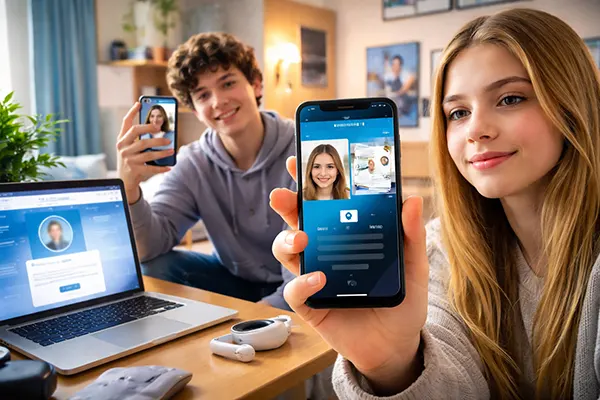
By 2026, age verification tools have become significantly more advanced. One of the most widely adopted methods is AI-based facial age estimation. Users may be asked to take a short video selfie, which is then analysed by algorithms trained to estimate age ranges with reasonable accuracy. These systems are designed to process data quickly without storing biometric information long-term.
Another approach involves document verification. Users upload a government-issued ID, which is cross-checked using automated systems. While this method is considered more accurate, it raises concerns around privacy and data security, particularly among younger users and their parents.
Some regions are experimenting with third-party identity providers. Instead of sharing personal data with each platform, users verify their age once through a trusted intermediary. This model aims to balance privacy with compliance, though adoption is still uneven across markets.
Impact on Teen Users: Privacy, Access, and Behaviour Changes
For teenagers, the shift towards verified identities has brought both benefits and challenges. On one hand, stricter controls reduce exposure to inappropriate content and limit interactions with unknown adults. Many platforms now automatically adjust content feeds and messaging permissions based on verified age groups.
On the other hand, the loss of anonymity changes how young people interact online. Earlier generations of users could experiment with identity and self-expression without linking accounts to real-world data. In 2026, this flexibility is more limited, as verification systems create stronger ties between digital profiles and actual identities.
There is also a growing concern about digital exclusion. Not all users have access to valid identification documents or are comfortable sharing biometric data. This can create barriers for participation, particularly in lower-income or marginalised communities.
How Platforms Are Adapting User Experience for Younger Audiences
To address these challenges, social media companies are redesigning user experiences for verified minors. For example, accounts identified as belonging to users under 18 often default to private settings, with restricted messaging options and curated content feeds.
Parental control features have also become more sophisticated. Guardians can monitor screen time, approve follower requests, and receive alerts about potentially harmful interactions. These tools aim to create a safer environment without completely removing independence from young users.
Additionally, platforms are investing in educational prompts and digital literacy features. Teen users are increasingly guided through privacy settings, content reporting tools, and safe interaction practices. This reflects a broader shift towards shared responsibility between platforms, users, and families.
Will Anonymous Accounts Disappear or Simply Evolve?
Despite stricter regulations, anonymity is unlikely to disappear entirely. Instead, it is evolving into a more controlled and context-dependent feature. Many platforms still allow pseudonymous usernames, but behind the scenes, verified age and identity data may be linked to the account.
In some cases, anonymous or semi-anonymous spaces are being preserved for specific purposes, such as mental health support communities or creative expression platforms. These environments often include moderation safeguards and limited interaction features to reduce risk.
The real shift lies in accountability. Even when users appear anonymous to others, platforms increasingly maintain internal verification records. This allows them to respond more effectively to harmful behaviour while still offering a degree of privacy in user-facing interactions.
What to Expect Beyond 2026
Looking ahead, age verification is expected to become more standardised across regions. Ongoing discussions in the EU and UK suggest the development of interoperable identity systems that could be used across multiple services, reducing friction for users while maintaining compliance.
Advances in privacy-preserving technologies, such as zero-knowledge proofs, may also play a role. These systems could allow users to confirm they meet age requirements without revealing exact personal details, offering a more balanced approach to verification.
Ultimately, the future of social media will likely be defined by a trade-off between safety and freedom. Anonymous teenage accounts may not disappear completely, but their role will be reshaped by regulation, technology, and changing expectations around digital responsibility.