
How AI Search Is Reshaping Social Media Traffic in 2026
In 2026, the relationship between social media and website traffic looks very different from what marketers were used to just a few years ago. The rapid integration of AI-driven search into platforms like Google, TikTok, Instagram, and even messaging apps has changed how users discover, consume, and trust content. Traditional referral flows from social networks are no longer predictable, and understanding these shifts has become essential for anyone working with online audiences.
The Rise of AI Search Inside Social Platforms
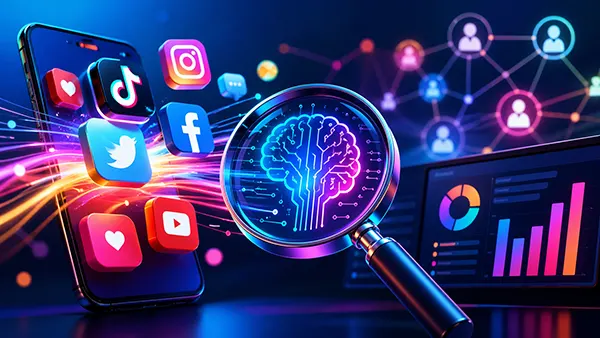
Social networks are no longer just distribution channels. By 2026, they have become search environments powered by AI assistants that summarise content, answer questions, and guide users without requiring them to leave the app. TikTok Search, Instagram Explore AI, and X (formerly Twitter) conversational feeds are prime examples of this shift.
This transformation reduces the need for external clicks. Instead of following a link to a website, users often receive a direct answer within the platform. AI models analyse posts, comments, and external sources to generate condensed responses, which significantly lowers outbound traffic compared to previous years.
As a result, content creators and publishers are competing not only with each other but also with AI-generated summaries. Visibility is no longer tied purely to engagement metrics like likes or shares, but to how well content is structured, interpreted, and prioritised by AI systems.
How AI Summaries Reduce Click-Through Behaviour
AI-generated summaries act as a buffer between the user and the original source. When a user searches for a topic, they often receive a clear, concise explanation without needing to explore further. This reduces curiosity-driven clicks, especially for informational queries.
For publishers, this means that traditional tactics such as catchy headlines or emotional hooks are less effective. Instead, clarity, factual accuracy, and depth of information play a bigger role in whether content is referenced by AI systems in the first place.
In practice, this leads to fewer but more qualified visits. Users who do click through are typically looking for deeper insights, case studies, or expert perspectives that go beyond what AI summaries provide.
Changing Traffic Patterns and Audience Behaviour
Traffic from social media in 2026 is more fragmented and less predictable. Instead of large spikes driven by viral posts, websites often see smaller, steady streams of visitors coming from multiple AI-assisted touchpoints.
Another key change is the shift in user intent. Social media audiences are now more goal-oriented when interacting with content. They rely on AI tools to filter irrelevant information, which means only content perceived as useful or authoritative gains visibility.
This has also affected the lifespan of content. Posts are no longer limited to a short window of relevance. If AI systems continue to reference a piece of content, it can generate traffic over a longer period, even without new engagement signals.
The Role of Trust and Authority in Traffic Distribution
AI search systems prioritise sources that demonstrate expertise and reliability. Signals such as author credibility, consistency of information, and alignment with verified data sources influence whether content is surfaced.
This aligns closely with E-E-A-T principles, where experience, expertise, authority, and trustworthiness determine content value. In 2026, these factors are not just theoretical guidelines but practical requirements for visibility in AI-driven ecosystems.
Websites that invest in transparent authorship, well-researched content, and clear structure are more likely to be referenced by AI systems, which directly impacts the quality and volume of incoming traffic.

Adapting Content Strategies for AI-Driven Discovery
To remain effective, content strategies must evolve beyond traditional social media optimisation. It is no longer enough to focus on engagement metrics alone. Content needs to be structured in a way that AI systems can easily interpret and reuse.
This includes clear headings, concise explanations, and logically organised information. Content that answers specific questions or addresses real user needs is more likely to be extracted and presented by AI tools.
Additionally, creators should focus on originality and depth. AI systems tend to prioritise content that adds unique value rather than repeating widely available information. This encourages a more analytical and experience-based approach to writing.
Practical Approaches to Maintain Traffic Growth
One effective approach is to create layered content. This means providing a concise answer for AI extraction while offering deeper insights for users who want more detailed information. This dual structure supports both visibility and engagement.
Another important factor is diversification. Relying on a single social network is increasingly risky. Traffic now comes from a mix of AI-driven search results, social feeds, and direct queries within apps, so a broader presence is essential.
Finally, continuous analysis is crucial. Monitoring which types of content are referenced by AI systems helps identify patterns and adjust strategies accordingly. In 2026, success depends on understanding not just the audience, but also the algorithms interpreting the content.